I. Preliminary Preparations: Becoming a Qualified Importer
1. Obtaining Essential Qualifications
RADAR License: Apply to the Brazilian Federal Revenue Service (Receita Federal) for access to the SISCOMEX system for foreign trade operations. Approval takes approximately 2 weeks.
CNPJ Tax Number: Company legal entity tax registration number, essential for imports.
Business Scope: Clearly indicate “import and export trade” when registering the company.
2. Determining Product Codes and Taxes
NCM Code: LVT flooring is usually classified as 39181090 (plastic flooring coverings) or 40169100 (other material flooring coverings).
Tariff Structure (based on CIF price):
Import Duty (II): 10%-20% (depending on the specific NCM code)
Industrial Product Tax (IPI): 0%-15%
PIS/COFINS Federal Tax: 9.25%
ICMS State Tax: 17%-25% (varies by state, e.g., approximately 17% in São Paulo) 18%
Example Calculation: CIF price $100,000, tariff 15%, IPI 10%, ICMS 18%
Tariff: $100,000 × 15% = $15,000
IPI: ($100,000 + $15,000) × 10% = $11,500
PIS/COFINS: ($115,000) × 9.25% = $10,600
ICMS: ($125,600) × 18% = $22,600
Total Taxes: $60,200 (approximately 60% of CIF price)
II. Supplier Selection and Procurement Process
1. Finding Reliable Suppliers
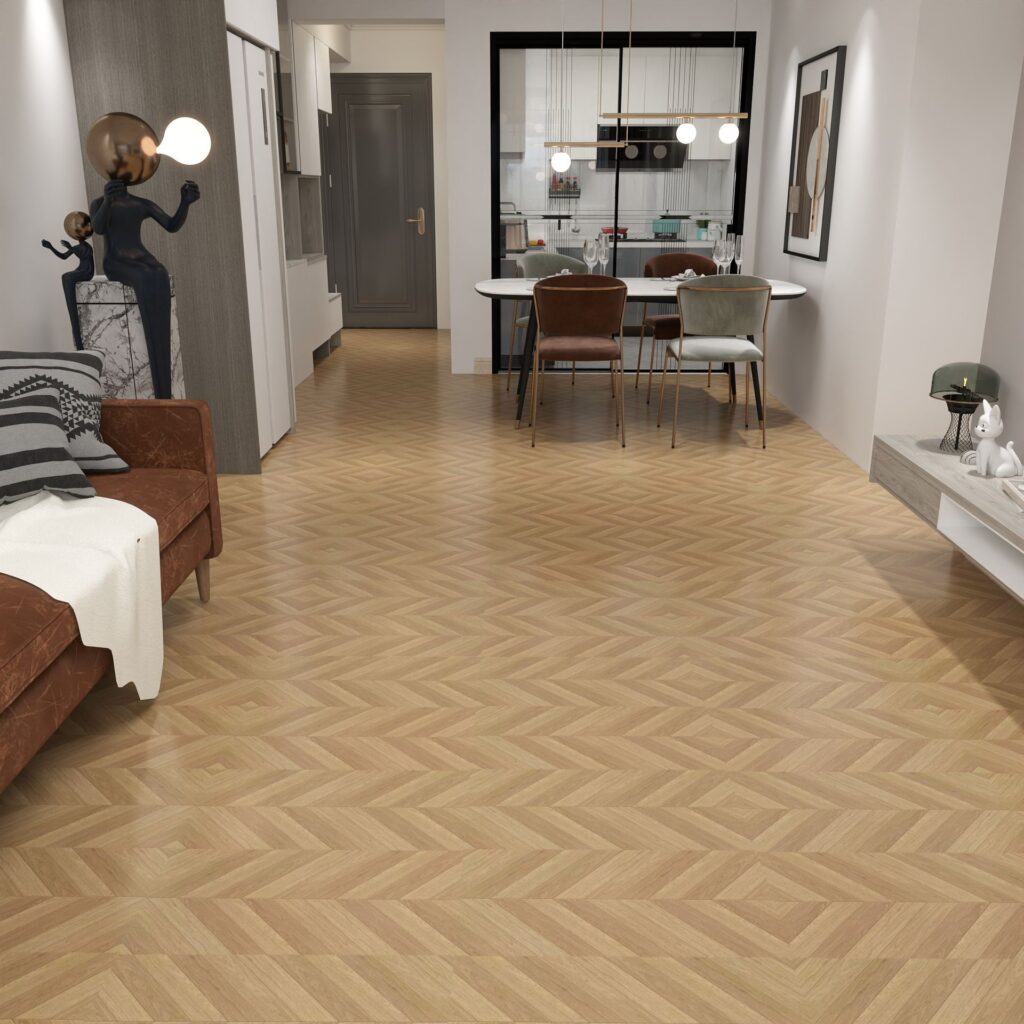
Shenzhen Mars Intelligent Manufacturing Industry Co., Ltd is specilized in LVT Flooring, SPC Flooring and WPC Decking since 2015.
Screening Criteria:
Certifications: ISO 9001, CE Certification, ISO 14001 (Environmental Protection)
Production Capacity: Factory size, number of production lines, monthly capacity
Product Quality: Sample testing (wear resistance, waterproofing, fire resistance)
MOQ: Confirm minimum order quantity meets requirements
Price Structure: Clarify FOB/CIF price, packaging costs, freight, etc.
2. Contract Signing and Payment
Trade Terms: Commonly used FOB (seller responsible for export customs clearance) or CIF (seller includes freight and insurance)
Payment Methods:
T/T (Telegraphic Transfer): 30% prepayment + 70% against copy of bill of lading
L/C (Letter of Credit): Reduces risk, suitable for first-time cooperation
Avoid D/P (Deferred Payment) (Brazilian banks often treat it as D/A, leading to default)
Contract Key Points: Product specifications, quantity, price, delivery date, quality standards, packaging requirements, dispute resolution
III. Certification and Document Preparation
1. INMETRO Certification (Key Step)
Necessity: LVT Flooring is classified as a building material and requires mandatory certification to be sold in Brazil.
Certification Process:
Submit technical documents (drawings, material list, test reports)
Product testing at an INMETRO-accredited laboratory (compliant with Brazilian NBR standards)
Factory audit (for some products)
Affixing the INMETRO mark after certification
Timeframe and Costs:
3-6 months in total, advance planning required
Approximately US$5,000-15,000 (depending on product complexity)
Alternative Solution: Find a Chinese supplier already certified by INMETRO to shorten the timeframe.
2. Required Customs Clearance Documents
Commercial Invoice (5 copies in Portuguese): detailed description, NCM code, unit price, total value
Packing List: carton number, weight, dimensions, consistent with the bill of lading
Bill of Lading: must be original (telegraphic release not accepted), showing freight and CNPJ
Certificate of Origin (CO): for possible tariff preferences
INMETRO Certificate Copy: required for customs clearance
Import Declaration (DI): submitted through the SISCOMEX system
IV. Logistics and Transportation Arrangements
1. Transportation Method Selection
Method | Advantages | Disadvantages | Applicable Scenarios
Sea Freight | Low cost (20ft container $1,500-3,000)
Suitable for large quantities | Long lead time (35-45 days) | Regular orders, limited budget
Air Freight | Fast speed (8-12 days) | High cost ($180/kg) | Samples, urgent replenishment
DDP | Seller responsible for the entire process (including customs duties)
One-stop service, low risk | Higher price | First-time import, unfamiliar with the process
2. Operational Process
China Segment: Supplier arranges factory to load container → Export customs declaration → Loading
Sea Freight Time: China port → Santos port, Brazil approximately 35-40 days
Brazil Segment: Destination port customs clearance → Tax payment → Pick-up → Delivery
Special Notes:
Packaging must be moisture-proof (Brazilian rainforest climate)
Outer box labeled “Made in China” and batch number
Bill of lading must show freight (Brazilian customs levies freight tax)
V. Detailed Customs Clearance Process
1. Pre-Arrival Preparation
72 days before goods arrive at the port 1. Pre-declaration via SISCOMEX system within 24 hours
Ensure all documents are accurate and consistent to avoid “red light” inspections
2. Customs Clearance Steps
Document Submission: Submit a complete set of documents to customs (invoice, packing list, bill of lading, etc.)
System Review: SISCOMEX automatically categorizes (green/yellow/red light)
Green Channel: Complete documents, release within 24 hours
Yellow Channel: Document inspection only, release within 72 hours
Red Channel: Dual inspection of documents and goods, 5-10 days
Tax Payment: Pay customs duties and other taxes after customs verification
Goods Inspection (Random): Verify that the goods match the declaration
Release and Pickup: Pick up the goods after obtaining customs permission, completed within 90 days (otherwise auctioned)
3. Common Problems and Solutions
Document Discrepancies: Leading to delays or fines; it is recommended to pre-review all documents.
High Tariffs: Declare truthfully to avoid penalties for underreporting (fines can reach 30% of the declared value).
Inspection Delays: Allow sufficient time and choose an experienced customs clearance agent.
VI. Subsequent Steps and Market Sales
1. 1. Pickup and Warehousing
Pick up goods upon presentation of customs release document, arrange inland transportation to warehouse.
Inspect goods for integrity upon unloading; take photos immediately and notify the insurance company if any damage is found.
2. Market Sales Preparation
Product labels must include Portuguese instructions, specifications, and certification marks.
Establish an after-sales service system to handle potential product complaints.
VII. Practical Suggestions and Precautions
1. Time Planning
Allow at least 6-8 months from signing the contract to receiving the goods (including certification time).
Avoid Brazilian holidays (such as Carnival) to avoid delays.
2. Cost Control
Certification: Prioritize suppliers with INMETRO certification to save time and costs.
Logistics: LCL is suitable for small batches, FCL is suitable for large batches.
Customs Clearance: Entrust experienced local agents to reduce additional costs.